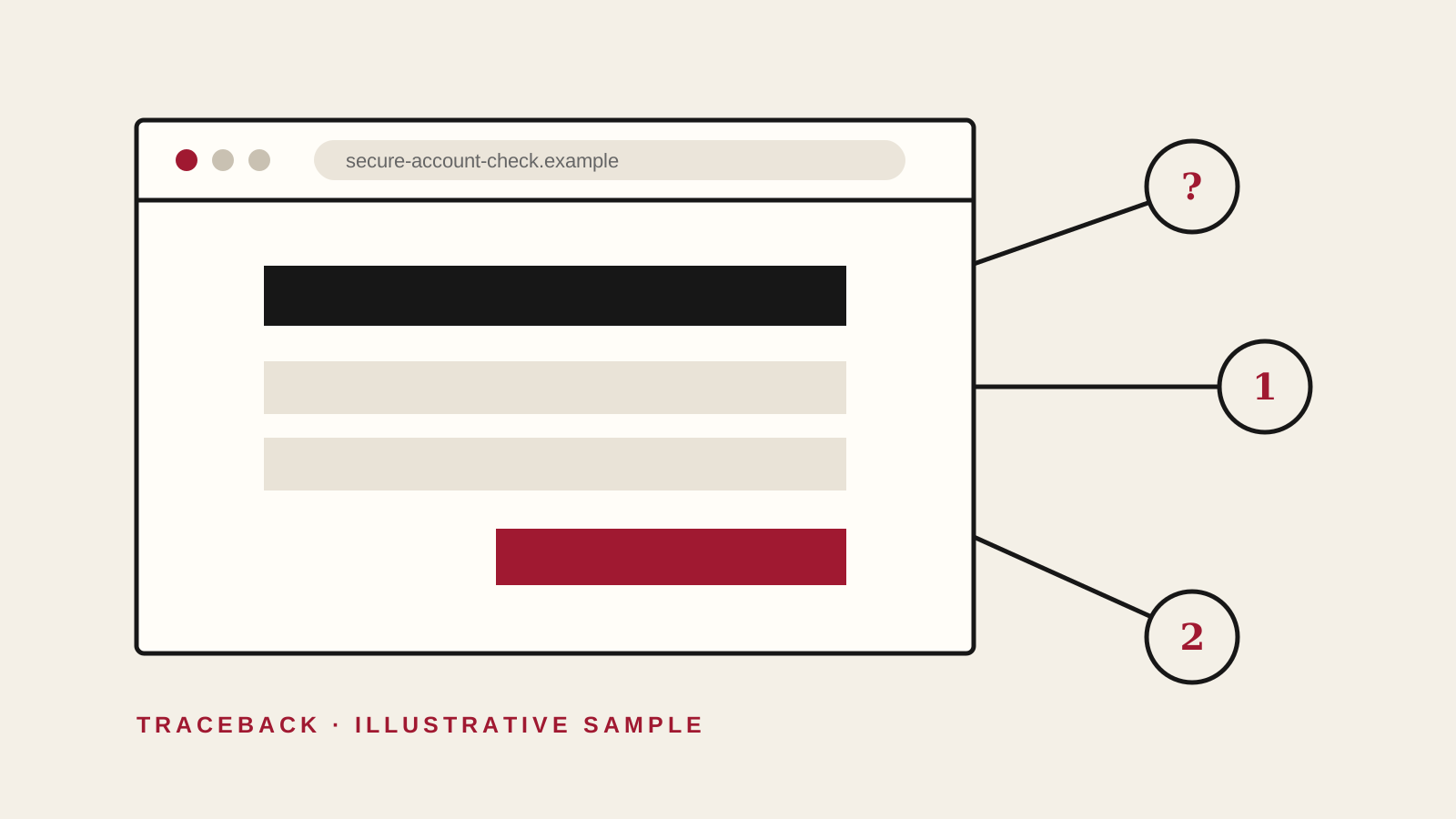
This is a sample article showing Traceback’s structure. The domain, timeline, and observations below are illustrative and do not describe a real campaign.
A login page can look convincing long before it earns our trust. A familiar logo, a tidy address bar, and an urgent message may be enough to make someone continue without asking who built the page—or why it appeared at that moment.
The useful question is not simply, “Is this page fake?” It is: what can the page itself prove, and where does the evidence stop?
What was noticed
Imagine a link using the reserved domain secure-account-check.example. It leads to a page that copies the colours and sign-in language of a well-known service. The page asks for a password, but its address does not belong to that service.
That mismatch is worth investigating. It is not yet attribution.
What was checked
A first pass could record the URL, the time it was observed, the page source, the destination of its form, and any network requests made when the page loads. Each observation should be preserved before the page changes or disappears.
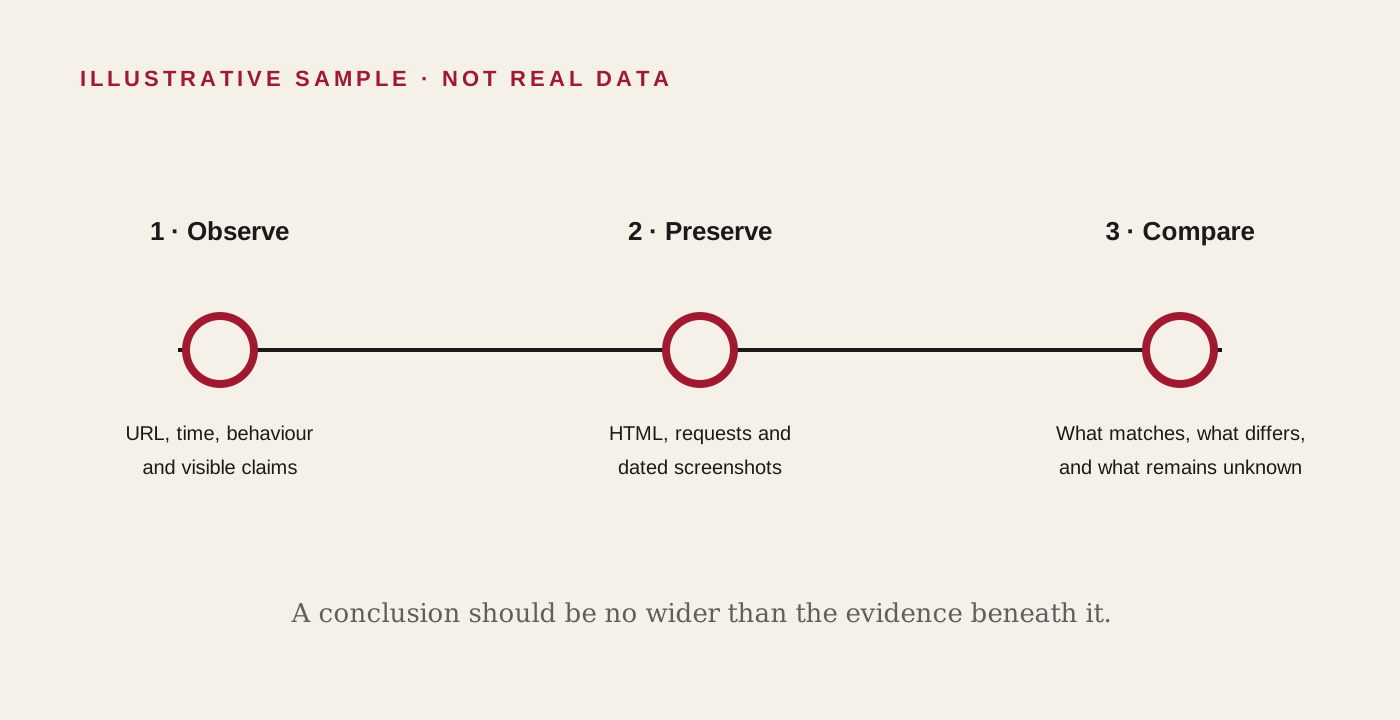
The same page can then be compared with the legitimate service: not only its appearance, but its domain, certificate, form behaviour, and linked infrastructure. A copied logo is evidence of imitation. It is not evidence of who operated the page.
What the evidence supports
If the form sends credentials to infrastructure unrelated to the imitated service, the evidence may support calling the page a credential-harvesting site. Archived HTML and request logs can make that conclusion reproducible.
The evidence may also connect this page to other pages that reuse the same code, analytics identifier, hosting account, or collection endpoint. Those links can define a cluster. They still do not automatically identify a person or group.
What remains unknown
Infrastructure is often rented, compromised, shared, or deliberately misleading. Registration details can be private. Code can be copied. An IP address can host unrelated sites.
The strongest conclusion may therefore be narrower than the most dramatic one: the page was built to imitate a service and collect credentials; several related pages appear to share infrastructure; the operator’s identity remains unknown.
That is not an incomplete investigation. It is an investigation that knows where to stop.
Why this matters
The difference between suspicion and proof is where many cybercrime stories become unreliable. Traceback will show that boundary rather than hide it. The aim is to leave readers with a clearer account of what happened—and a better sense of what still needs to be asked.